
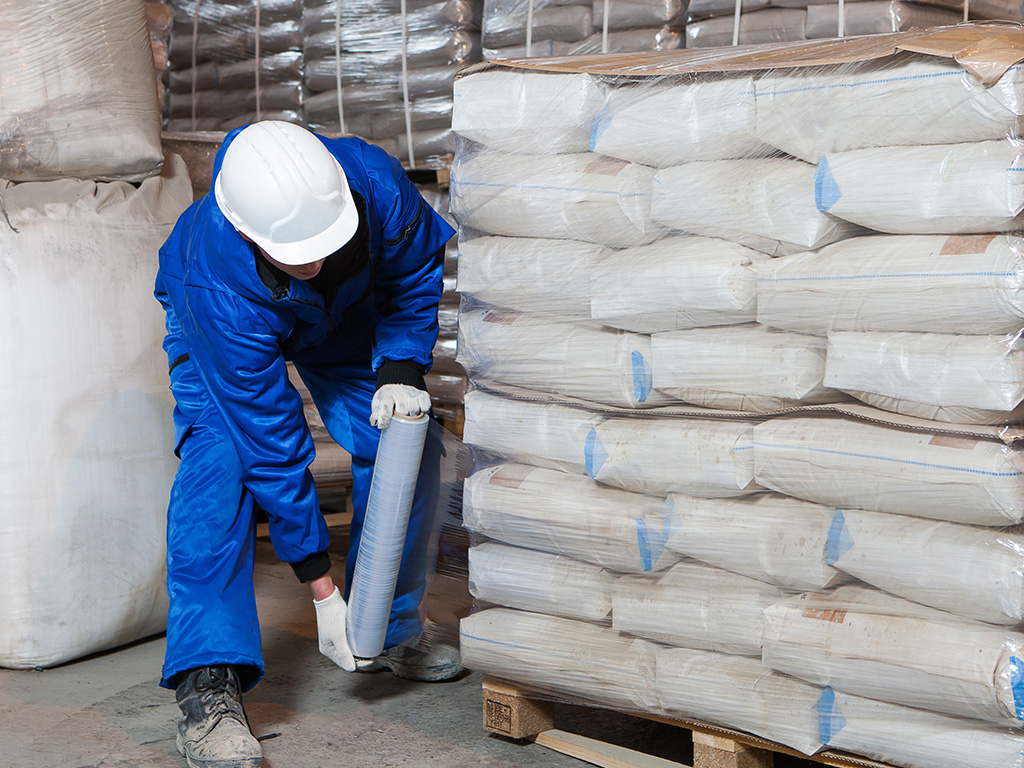
Pallet packaging with the right materials ensures safe transport and helps prevent goods from being damaged during handling and shipping phases.
When we talk about pallets, we refer to wooden structures that assist in the movement and shipment of goods. These must be of good quality, stable, and completely undamaged.
In this article, we’ll look at the steps to follow for proper pallet packaging and the best materials to use.
The steps to follow for pallet packaging
Following certain steps for correct pallet packaging allows you to achieve excellent results in terms of safety. First, it’s important to properly assemble the goods, choose the right materials, and finally, fully cover both the pallet and the goods.
Let’s look at the main stages.
Assembling the goods on the pallet
The first step in achieving safe and effective pallet packaging is to correctly position the goods to be packaged and arrange the individual products to occupy all available space. It’s important that the individual boxes are tightly grouped and organized to ensure maximum load stability and prevent the goods from tipping during handling.
The technique used to stack goods on pallets is crucial, and the choice depends on the size of the boxes. For example, you can use the interlocking pattern method, alternating smaller and larger packages. The key is to avoid creating a pyramid and instead aim for a cubic shape. This results in better pallet packaging and minimizes potential damage while optimizing space.
Choosing the right packaging materials
Once the goods have been properly placed on the pallet, it’s time to move on to the protection phase. At this stage, it’s necessary to choose the right packaging materials for the pallets:
- Filling materials – to protect the goods from impacts;
- Fastening systems – such as straps, buckles, and disposable hooks to secure items that may shift during transport;
- Shrink film – to tightly wrap the load with multiple layers, preventing any kind of movement.
At Flexpack, we provide our customers with shrink film in various formats, such as polyethylene shrink hoods, bags, or pallet covers — custom-made gusseted bags — as well as reels available in standard or custom lengths.
Our shrink film is waterproof, tear-resistant, and blocks sunlight, preventing damage to the packaged goods.
Protecting the contents
The final step is to securely fasten the goods to the pallet by wrapping them with the proper materials. When using shrink film, the pallet should be raised to facilitate full coverage, including the lower corners, and to tightly bind both the goods and the pallet base together.
Pallet wrapping can be done manually or using an automatic pallet wrapping machine, which is faster, more precise, and saves time while ensuring complete coverage of the goods.
The entire pallet should be wrapped with the right amount of film, ensuring a thick, resistant layer of the correct size to fully secure the load.
Discover the range of products we at Flexpack offer for safe packaging.







'/%3E%3Cpath%20fill='%23b2b2b2'%20d='M241%20382q0%2016%2017%2026%2017%2011%2042%2011t42-11q16-11%2017-26V269H241'/%3E%3Cpath%20fill='%239f7e00'%20d='M241%20379q0%2014%208%2023%209%209%2021%209%2014%200%2021-9%209-9%209-23V269h-59'/%3E%3Cpath%20d='M241%20339v-70h59v110q0%2014-9%2023l-6%205v-68h-15v72q-8%200-14-4v-68zm59%2040c0%2022%2015%2032%2029%2032%2021%200%2030-18%2030-32v-40h-59'/%3E%3Cpath%20fill='%239f7e00'%20d='M266%20277v5h2v12h-3v-5h2v-5h-9v5h2v5h-4v9h3v18h-5v10h34v-10h-5v-18h3v-9h-4v-5h2v-5h-9v5h2v5h-3v-12h2v-5zm42%20101q0%2010%206%2017%206%206%2015%207%2010-1%2016-7%206-7%206-17v-29h-43'/%3E%3Ccircle%20fill='%230044ad'%20cx='329.5'%20cy='372'%20r='6'/%3E%3Cellipse%20fill='%230044ad'%20cx='300'%20cy='340'%20rx='16'%20ry='21'/%3E%3C/svg%3E)