
Protecting Goods During Industrial Shipments
The market offers many packaging systems capable of meeting a wide range of transportation needs. Packaging is essential to preserve the integrity of goods during transit.
Why is packaging protection so important during shipments?
- Because long-duration shipments carry greater risks, especially when multiple transport methods are used (by land, sea, or air).
- Due to the risk of goods tipping over and water or moisture infiltration, particularly for sea transport.
- Because weather conditions are unpredictable: some goods are sensitive to temperature fluctuations.
To address these challenges, shipments must be carefully planned and the appropriate materials chosen for packaging the goods. In this article, we will focus on tar paper for packaging and its industrial applications.
What Tar Paper Rolls Are
First, let’s explain what tar paper for packaging is: it is an effective waterproofing tool, primarily used for sea transport.
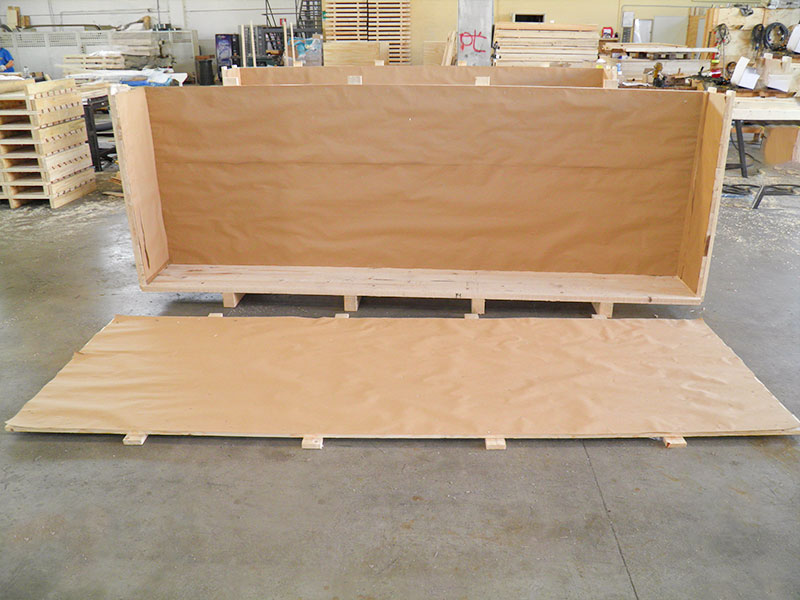
Tar paper is created by bonding two sheets of creped, bituminized paper with a layer of tar in between, reinforced with longitudinal nylon fibers. It is applied to line the inside of wooden packaging and is typically available in rolls of various sizes.
What Tar Paper Is Used For
Thanks to its construction, tar paper for packaging is ideal for protecting goods from corrosive agents such as water and moisture. Its high insulating properties make it an indispensable material for maritime shipments, which are at greater risk of infiltration.
At Flexpack, we specialize in the production of practical and durable industrial packaging and offer a wide variety of products. Discover more about the tar paper for packaging we provide. For other industry-related articles, check out our blog!





'/%3E%3Cpath%20fill='%23b2b2b2'%20d='M241%20382q0%2016%2017%2026%2017%2011%2042%2011t42-11q16-11%2017-26V269H241'/%3E%3Cpath%20fill='%239f7e00'%20d='M241%20379q0%2014%208%2023%209%209%2021%209%2014%200%2021-9%209-9%209-23V269h-59'/%3E%3Cpath%20d='M241%20339v-70h59v110q0%2014-9%2023l-6%205v-68h-15v72q-8%200-14-4v-68zm59%2040c0%2022%2015%2032%2029%2032%2021%200%2030-18%2030-32v-40h-59'/%3E%3Cpath%20fill='%239f7e00'%20d='M266%20277v5h2v12h-3v-5h2v-5h-9v5h2v5h-4v9h3v18h-5v10h34v-10h-5v-18h3v-9h-4v-5h2v-5h-9v5h2v5h-3v-12h2v-5zm42%20101q0%2010%206%2017%206%206%2015%207%2010-1%2016-7%206-7%206-17v-29h-43'/%3E%3Ccircle%20fill='%230044ad'%20cx='329.5'%20cy='372'%20r='6'/%3E%3Cellipse%20fill='%230044ad'%20cx='300'%20cy='340'%20rx='16'%20ry='21'/%3E%3C/svg%3E)