
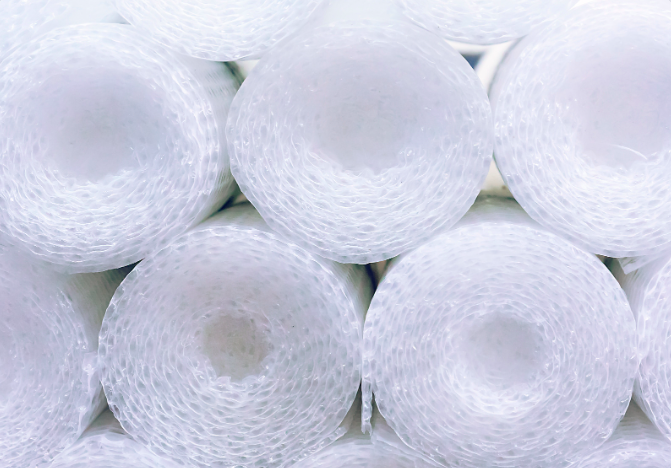
The choice of materials for packaging goods also involves selecting the so-called filling materials — the elements added inside packages to make them safer. It’s important not to consider these materials as minor details, as their role is essential to achieving secure, high-quality packaging in every aspect. Only by combining premium packaging materials with the right fillers to manage internal space can excellent results be achieved.
Why it’s important to choose the right filling materials for your packaging
Filling materials must be carefully selected based on the type of goods being transported and the type of packaging materials chosen.
These elements protect goods, preventing breakage and damage during package handling and shipping.
Since transport conditions are not always ideal, and during movement goods may collide with other packages or parts of the vehicle, it’s crucial to stabilize the load. How? By using filling materials to absorb potential shocks and unwanted movements.
Considering the nature of the goods helps in selecting the most suitable materials: a more fragile product will need additional protection, while a heavier one must first be properly stabilized to prevent movement during transport.
Managing empty space inside packaging
The main function of filling materials is to help manage empty space inside packages, thus preventing damage to goods. It’s important to allow minimal movement to absorb vibrations and inevitable handling shocks, but not so much as to cause deterioration of the products.
The chosen filling material should provide both stability and rigidity, as well as a certain degree of flexibility.
At Flexpack, we offer our clients two types of filling materials depending on the goods: polyethylene-based or metallic materials.
Plastic materials: foam peanuts and bubble wrap
Polyethylene filling materials are most commonly used for small and medium-sized items. To cushion impacts, plastic materials such as foam peanuts and bubble wrap are ideal. The latter, also known as “millebolle,” helps absorb shocks while being particularly lightweight, easy to use, and adaptable to different packages.
In addition to bubble wrap, other common filling materials include foam peanuts, which absorb vibrations in empty spaces. Products can be placed within them to keep items separated from the outer packaging, holding them securely in place.
Metal components: U-irons, bars, and plates
Metal accessories are used to reinforce and stabilize packaging — for instance, inside wooden crates used to transport heavy goods such as machinery.
Goods packed inside wooden crates must be stabilized using metallic elements that provide strength and safety, such as U-irons, threaded bars, plates, and metal sheets that secure the load and prevent dangerous movements.
Deciding which packaging materials and filling materials to use for your goods is a crucial choice — that’s why relying on professionals is always the best option.
Contact us to get more information and receive personalized solutions.






'/%3E%3Cpath%20fill='%23b2b2b2'%20d='M241%20382q0%2016%2017%2026%2017%2011%2042%2011t42-11q16-11%2017-26V269H241'/%3E%3Cpath%20fill='%239f7e00'%20d='M241%20379q0%2014%208%2023%209%209%2021%209%2014%200%2021-9%209-9%209-23V269h-59'/%3E%3Cpath%20d='M241%20339v-70h59v110q0%2014-9%2023l-6%205v-68h-15v72q-8%200-14-4v-68zm59%2040c0%2022%2015%2032%2029%2032%2021%200%2030-18%2030-32v-40h-59'/%3E%3Cpath%20fill='%239f7e00'%20d='M266%20277v5h2v12h-3v-5h2v-5h-9v5h2v5h-4v9h3v18h-5v10h34v-10h-5v-18h3v-9h-4v-5h2v-5h-9v5h2v5h-3v-12h2v-5zm42%20101q0%2010%206%2017%206%206%2015%207%2010-1%2016-7%206-7%206-17v-29h-43'/%3E%3Ccircle%20fill='%230044ad'%20cx='329.5'%20cy='372'%20r='6'/%3E%3Cellipse%20fill='%230044ad'%20cx='300'%20cy='340'%20rx='16'%20ry='21'/%3E%3C/svg%3E)